
Childhood obesity: why solitary play deserves attention
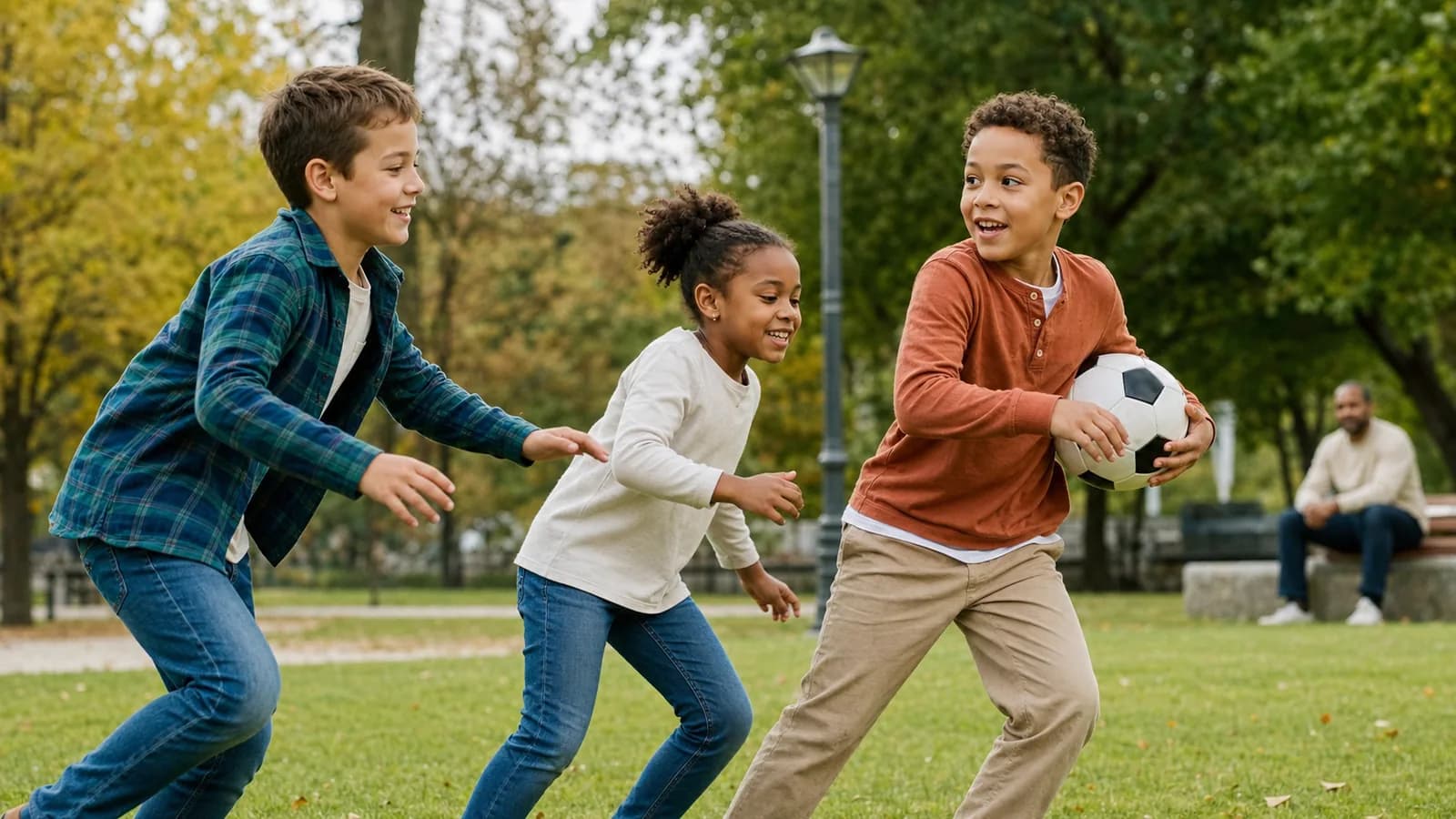
When discussing childhood obesity, the conversation almost always centers around the plate: sugar, fast food, calories, soda. All of this is important. But sometimes prevention starts not with the refrigerator, but with the yard, sports activities, school breaks, and who the child plays with.
A study published in the journal Childhood Obesity found that children with severe obesity played alone 8% more often than children without obesity. Statistically, the result is significant, but the sample size is small: only 414 participants. Therefore, making bold conclusions like 'loneliness causes obesity' would be scientific overreach.
However, this is precisely the case where preliminary data prompts reflection. Collective play may not just be a highlight of childhood, but a part of prevention.
Why playing with others is more important than it seems
Collective play almost always requires movement, waiting in line, reacting to others, emotional engagement, and simple social rules. A child is not just running around. They learn to keep pace with the group, lose and win, negotiate, and return to activity after failure.
Solitary play is not a problem in itself. Some children need more personal space, and that is okay. The issue arises when solitude becomes a persistent scenario: the child does not engage in group play, avoids activity, receives less social support, and gradually slips into a sedentary lifestyle.
What can be a cause here, and what is a consequence
The most dangerous mistake is to immediately look for a culprit. A child with obesity may play less with others not because they are 'lazy', but because they tire more quickly, feel self-conscious about their body, fear ridicule, or have had unpleasant experiences. In such cases, solitary play is not the cause, but a consequence of social and physical vulnerability.
But this does not change the preventive task much. If a child falls out of an active social environment, they need not a lecture on calories, but a gentle return to safe activity.
What adults should do
- Do not mock their weight or compare the child to more active peers.
- Find a movement format where the child will not be last or feel guilty: swimming, walking groups, play training, dancing, family outings.
- Negotiate with the school for a bullying-free environment, because shame does not cure obesity.
- Monitor not only the child's diet but also whether they have company for safe activities.
The dry conclusion here is simple: collective play does not replace doctors, nutrition, and sleep. But it can be that often underestimated preventive platform where a child starts moving again not out of obligation, but because it is interesting and not frightening.
Source: Childhood Obesity. 2025;21(7):600-607. doi:10.1089/chi.2024.0426.
Related materials

Does detox cleanse the body? A fact check
What the body does on its own, where detox marketing overreaches, and how to discuss the claims with clients.
1 min
How China builds prevention into public policy
How China links policy, urban spaces, primary care, nutrition and risk management in its approach to prevention.
1 min
Supplements: taking more does not always help
Why more supplements do not necessarily bring more benefits, and what practitioners should ask when taking a client’s history.
1 min