
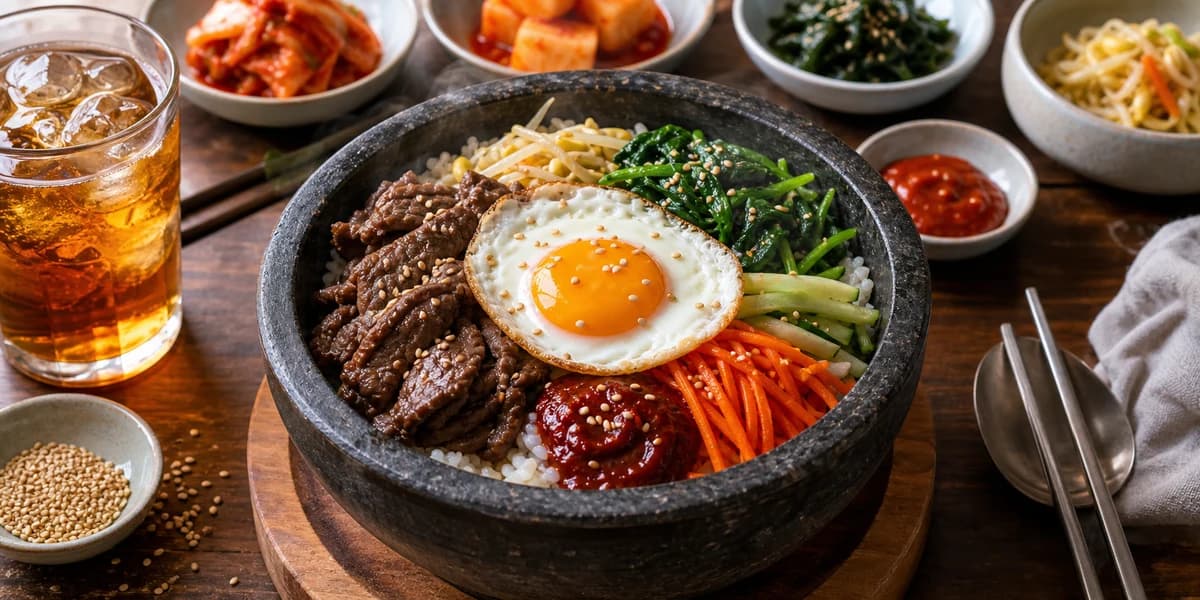
Korean bibimbap with vegetables and egg
Calories520 kcalper serving
Time50 minprep time: 25 min
Cost₽ ₽ ₽product rating
Nutritional value
Per serving
- Proteins
- 27 g
- Fats
- 18 g
- Carbohydrates
- 70 g
- Fibre
- 6 g
- Sugar
- 7 g
- Salt
- 2 g
Description
Bibimbap is a Korean bowl of rice, vegetables, meat, egg, and spicy gochujang paste. The essence of the dish lies in the contrast of textures and the fact that everything is mixed before eating.
How to prepare
- Cook the rice and prepare the vegetables: carrot, cucumber, spinach, or bean sprouts.
- Quickly stir-fry the meat with soy sauce, garlic, and sesame oil.
- Prepare the egg with a runny or semi-runny yolk.
- Place the rice in a bowl, arrange the vegetables, meat, egg, and gochujang paste on top.
- Before eating, mix everything directly in the bowl and add sesame seeds.
Practical advice
Useful meal optimisation
Maintain a variety of vegetables and increase their volume, and use brown rice or mix regular rice with unpolished rice. Gochujang sauce contains a lot of salt and sugar, so use it sparingly. Add tofu or lean beef and serve kimchi in a small portion due to its saltiness.
Ingredients
What you will need
- 220 g rice
- 220 g beef
- 1 pcs. carrot
- 1 pcs. cucumber
- 120 g spinach
- 2 pcs. eggs
- 2 tbsp. kochujang paste
Expert opinion
Professor’s comments
I appreciate bibimbap for its balance: grains, vegetables, protein, and fermented flavors all in one bowl. The main risk is the sauces, which can contain a lot of salt and sugar. If added moderately, the dish turns out vibrant and quite reasonable.